

Bereavement Support
Grief is a natural process, but it can feel overwhelming. Our specialist team are here to support you.
Our bereavement counselling team is here to support you through the challenges that follow a death, with a focus on post‑bereavement care and navigating complex grief and trauma. We can help you understand your emotions, explore how they are affecting your daily life, and develop practical tools and techniques to ease their impact.
Our Bereavement Service is available to anyone living in the Teesside area. We believe support should never be limited by where a loved one died, which is why we continue to develop our service for anyone aged 7 and above who has experienced a loss more than six months ago. We can also offer a variety of ways that sessions can take place, such as face-to-face, telephone* and remote counselling*.
Bereavement, loss and grief can bring deep pain, sadness and a sense of isolation, leaving you feeling confused or fearful. It’s important to remember that while grief can affect your mental health, these feelings are entirely normal. They are part of the natural healing and adjustment process we all move through after experiencing a profound loss. For many people, these emotions become more manageable over time.
Talking with someone you trust, such as a family member or friend about how you’re feeling can be helpful. You don’t have to face this alone, and support is available from Teesside Hospice.
Organisations such as Cruse, Samaritans, Mind, NHS 111 Adults, or for CYP Winston’s Wish, Child Bereavement UK and Grief Encounter also have helplines and resources that can help with grief, loss and wellbeing.
On rare occasions you may still be experiencing significant problems long after the bereavement. In cases like these, we know that expert, clinical support can make a difference and that is where Teesside Hospice Bereavement Counselling Service focusses its work.
If your bereavement was over six months ago and you are still finding that you are having serious difficulties, our trained counsellors can help you.
If, after six months, you feel you are still struggling with your bereavement, you can access our counselling service by making a referral online, by telephone, or by visiting us in person. If you do not feel comfortable referring yourself, you can ask a friend, relative or your GP to make a referral on your behalf, with your consent.
Once we receive your referral, a member of our counselling team will contact you to discuss the next steps and ensure the support we offer is right for you.
To make our service as accessible as possible, we provide counselling in a range of formats to suit your needs, including telephone sessions*, face‑to‑face appointments and remote counselling*. When we contact you, we will also discuss any reasonable adjustments you may require.
Need Support?
Our service deals with what is known as complicated grief and does not generally show itself for the first six months after a bereavement. Before this time, it is expected and completely normal to experience strong and difficult feelings, however, most people will start to come to terms with the loss.
Although this is not a rule we use, this as a guideline to know who we should try to help with specialist complex grief counselling. Counselling like this can be very demanding emotionally and you will need to be ready to be able to think and talk about your feelings as best you can.
Visit MIND UK and/or Cruse to help you understand more about grief and how to help yourself.
If after six months you feel you are still struggling, please come back to this website to refer yourself/Service user for counselling.
If you feel you do not want to wait until after six months, then you can:
- Contact your GP
Seek private counselling that you will need to pay for. Many counsellors have the same restrictions about when bereavement counselling should begin as our service does:
- Contact the British Association for Counselling and Psychotherapy (BACP)
- Contact UK Council for Psychotherapy (UKCP)
- Contact the National Counselling and Psychotherapy Society (NCPS)
Useful Info

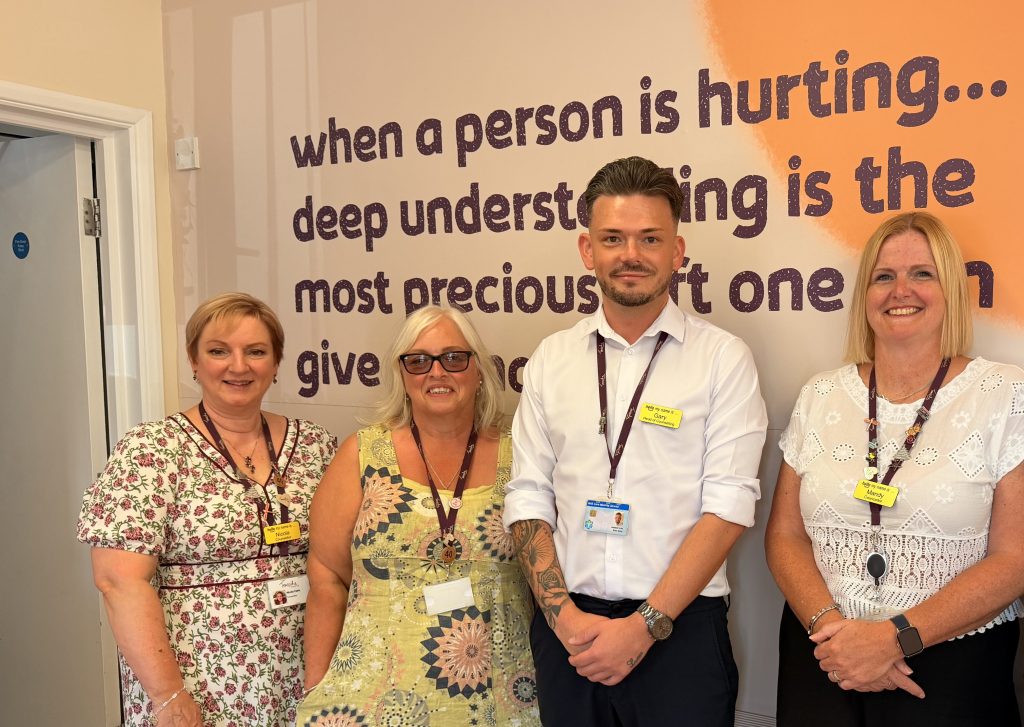
Meet Gary – Group Head of Counselling
I guide the Counselling Services at Teesside Hospice, I am committed to ensuring that every person who accesses our service receives compassionate, person-centred support. I am proud to work with an exceptional team of professionals who share a passion for delivering high-quality care and continually developing services to meet the needs of our community.
Frequently asked questions
Yes. Whilst we are preparing to accept new referrals, there are resources online and bereavement helplines that will be able to give you advice and guidance.
NHS Bereavement Helpline
Call the NHS bereavement helpline on 0800 2600 400 for guidance and support if someone you know has died.
It’s open every day from 8am to 8pm.
The nurses on the helpline can give you advice, guidance and practical support during this difficult time.
Cruse Bereavement Care
Cruse offers telephone, email and website support to anyone affected by bereavement. You can visit www.cruse.org.uk or call their helpline on 0808 808 1677 to access their support.
Child Bereavement UK
Child Bereavement UK help children and young people (up to age 25), parents, and families, to rebuild their lives when a child grieves or when a child dies.
Visit www.childbereavementuk.org or call their helpline on 0800 088 8840 for support.
Winston’s Wish
Winston’s Wish support children and young people after the death of a parent or sibling. Their helpline is free to call on 08088 020 021 and offers therapeutic advice following a bereavement.
You can visit their website too for more information; www.winstonswish.org
Yes, if you need to speak to someone straight away, there is help out there.
Samaritans
The Samaritans are there to listen, no judgement, no pressure, and help you work through what’s on your mind. You can call day or night, for free, on 116 123 or visit their website www.samaritans.org
Everyone’s grief is unique, coming to terms with the loss of someone connected to you can be very lonely and confusing. It is normal to grieve. For many people support from friends and relatives helps them to adjust. However, sometimes it can be difficult to find a way through the complexities of grief.
Here are five things about grief we have learned, that may help you:
Grieving is unpredictable and sometimes comes in waves
Early grief may be characterised by feelings of numbness and unreality
Grief can be experienced as physically traumatic so please take care of yourself, try to eat and stay hydrated
Grief may be experienced in combination with other feelings such as anger, abandonment and sometimes relief
Sleep disturbance is common. If your sleep pattern changes try not to fret about it and still make sure you get enough rest.
If you’re unable to move through your grief, or are concerned about the wellbeing of a child who isn’t coping well take a look the information about support available, or keep watching this space for details of our service launch in Autumn.
It can be helpful to think of grief as a large box containing lots of other feelings. You may experience some or all of the feelings contained within the box. Feelings may come and go. Sometimes feelings will be very strong at other times they may be less intense.
We’d like to help you to understand some of the feelings that might be in your box. Everyone has their unique combination. Here’s just a few of the things you might feel –
Relief
It might sound strange but if someone you care about dies after being ill and in pain or suffering a bad accident, you may feel relieved that they have died and are no longer suffering.
Guilt
Nobody is perfect. When we look back on our relationship with someone who has died and how we behaved it’s always possible to think how we might have done things differently and we feel guilty.
Sometimes when we are grieving we put ourselves under pressure to feel sad all the time and when we catch ourselves feeling other things, we can feel guilty and uncomfortable.
Embarrassment
When someone you care about dies it makes you different from other people who still have their loved one. This can feel uncomfortable. Grief also tends to make it harder to control your emotions.
You may feel worried that you are going to break down in tears in front of people and make yourself feel even more vulnerable.
Over time most people find that they learn how to manage their feelings and find ways to excuse themselves from situations if they feel overwhelmed.
Anger
The death of someone you care about can feel very unfair. It can make you feel angry that no-one prevented the death.
Often people feel angry because in a way it’s safer to get angry than it is to allow yourself to acknowledge just how sad you feel underneath.
Sadness
Sadness is another of those feelings – like grief – that can be different for different people.
Some people cry a lot and want to talk because they are sad. Some people push their feelings away to the point where it seems like they aren’t feeling anything at all and really don’t want to talk.
Sadness can make us feel lethargic and uninterested in life. Or it can drive us to keep really busy in an attempt to avoid difficult feelings.
What can help?
It’s important to work out your own unique formula for helping yourself. It needs to fit who you are. Remember everyone’s grief is different.
Try to eat well and drink plenty of water – grief is stressful and you need to look after yourself.
Get the balance right for you –there will be times when you want to talk, so try to find someone you trust. There will be times when you want to be quiet and that’s ok too.
Find things to distract yourself. There’s no rule that says you must think about the person who has died and feel sad all the time.
It’s good to find things that give you a break from painful feelings.
Give yourself permission to cry when you need to.
Notice that no-one cries for ever. Eventually the feelings reach a peak and then start to subside a little.
If you are worried about anything that you are feeling or thinking then please find someone to talk to.
Sometimes people need a bit of help with their grief. It’s good to keep an eye on yourself and make sure you ask for help if you need it.
Children have a limited ability to put feelings, thoughts and memories into words and tend to “act out” with behaviours rather than express themselves verbally. They will gradually acquire the language of feelings by listening to words that you use. Showing your grief will encourage them to express theirs.
Children are naturally good at dipping in and out of their grief. They can be intensely sad one minute, then suddenly switch to playing happily the next. This apparent lack of sadness may lead adults to believe children are unaffected when really it is a safety mechanism that prevents them being overwhelmed by powerful feelings.
As a parent/carer or as an important figure in a child’s life you can watch out for any changes in their behaviour which could be their way of expressing feelings they can’t talk about. Clinginess, aggression, regression, lack of concentration and sleep problems are all natural reactions that will pass. However, if you have concerns take a look at how to access our counselling.
Useful Info
Our impact in Teesside
We’re changing lives across Teesside by supporting people and families who’ve been affected by a terminal illness.
Last year...
Thanks to your help, we supported around 4,000 people in Teesside.
Did you know?
In 2023/24, we raised £897,145 from people leaving a gift in their will.
Funding Fact
It costs us £20,500 a day to run our services and provide them for free to those who need it.